Advancing Gender Inclusive Surgical Systems
March 2026 | Nairobi, Kenya
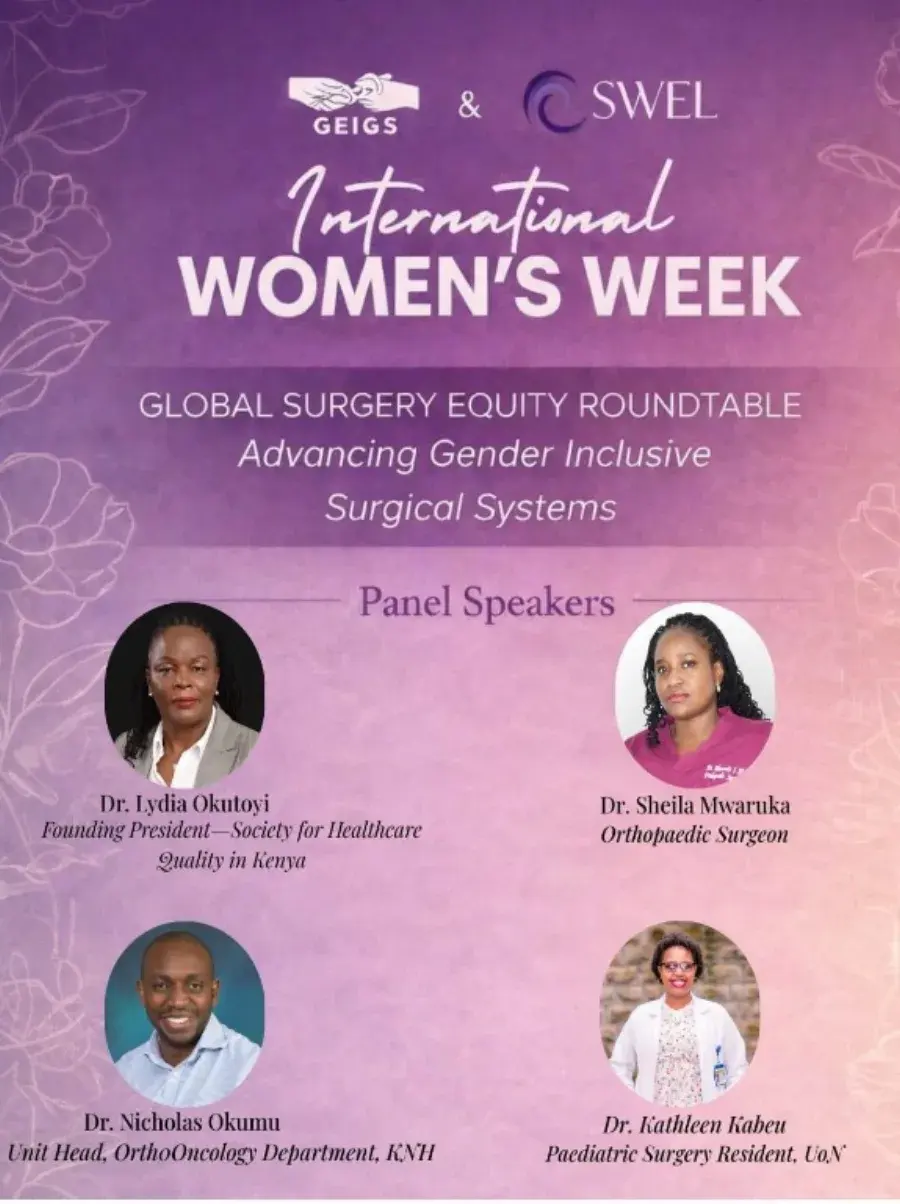
As part of International Women's Week 2026, the Surgical Work and Equity Lab (SWEL) in collaboration with the Gender Equity in Global Surgery (GEIGS) convened surgical trainees, consultants, academic leaders and members of the Kenya Association of Women Surgeons (KAWS) for a national roundtable examining the future of surgical training in Kenya.
Through a moderated panel discussion, Dr. Lydia Okutoyi, Dr. Sheila Mwaruka, Dr. Nicholas Okumu and Dr. Kathleen Kabeu reflected on surgical training, institutional leadership, healthcare quality, mentorship and the conditions needed to build more inclusive and sustainable surgical careers.
The discussion sought to understand how training institutions can better support an increasingly diverse surgical workforce while maintaining excellence in specialist education. Participants reflected on their experiences across training and practice, exploring the policies, systems, and workplace cultures that shape career progression and retention within surgery.
The roundtable formed part of a broader consultation process conducted by SWEL between 2025 and 2026 and informed the development of a framework and brief that will help reposition Kenya as a leader in Gender-Inclusive surgical training.
The roundtable reinforced the need to move beyond conversations about representation toward practical institutional reforms that support career sustainability and workforce retention. The insights generated informed a series of policy recommendations developed jointly by SWEL and KAWS, including proposals on parental leave, return-to-training pathways, mentorship structures, and trainee support systems.
By bringing together trainees, practitioners, and academic leaders, the roundtable demonstrated the value of evidence-informed dialogue in shaping the future of surgical training in Kenya and strengthening the workforce that will deliver surgical care for generations to come.
Key Insights from the Roundtable
Sustainability of Surgical Careers
Participants consistently identified burnout, work-life balance, and family planning as important considerations influencing career decisions. Discussions highlighted growing recognition that workforce sustainability is critical to retaining talented trainees and building the surgical workforce needed to meet Kenya's future health needs.
Training Culture and Inclusivity
Many participants described surgical training environments as insufficiently inclusive and emphasized the importance of fostering cultures that support all trainees to succeed. Conversations focused on how institutions can create environments that promote belonging, professional growth, and long-term retention.
Structural Barriers in Training
Participants shared experiences of barriers that can affect progression through training, particularly during major life transitions. Discussions highlighted the need for clearer institutional policies and greater consistency in how support mechanisms are implemented across programmes.
Parenthood, Leave, and Return to Training
A recurring theme was the challenge of navigating parental leave and returning to training. Participants emphasized the importance of clear pathways that protect progression while ensuring trainees receive the support needed to transition back into clinical and academic responsibilities.
Mentorship and Leadership Development
Mentorship emerged as one of the most frequently cited opportunities for improvement. Participants highlighted the value of structured mentorship programmes, particularly access to mentors who have successfully navigated similar career and life experiences.
From Dialogue to Action
The roundtable reinforced the need to move beyond conversations about representation toward practical institutional reforms that support career sustainability and workforce retention.