Global Surgery: Translating International Protocols/Guidelines to Practical Local Solutions
April 2026 | Surgical Society of Kenya Annual Scientific Conference
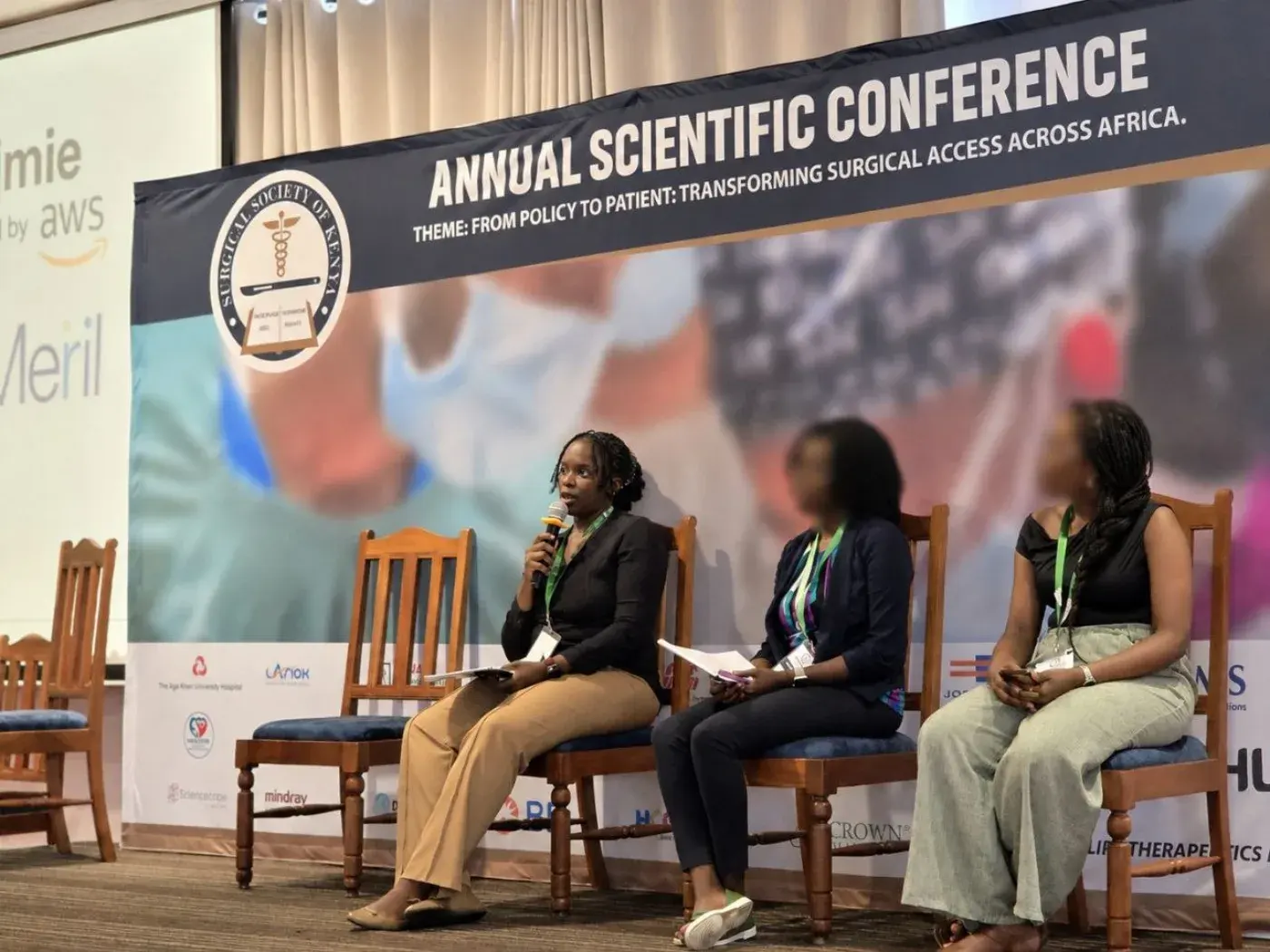
As part of the Surgical Society of Kenya (SSK) Annual Scientific Conference 2026, SWEL Founder Dr. Jill Mayunga participated in a panel discussion exploring one of the most important questions facing surgical systems across Africa: How do we translate international guidelines into practical solutions that improve patient care?
Held under the conference theme "From Policy to Patient: Transforming Surgical Access Across Africa," the session brought together surgeons, researchers, policymakers and global surgery practitioners to examine why many evidence-based interventions struggle to achieve sustained impact despite strong supporting evidence.
A central theme of the discussion was that Africa does not suffer from a shortage of surgical frameworks. National Surgical, Obstetric and Anaesthesia Plans (NSOAPs), the WHO Surgical Safety Checklist, and global surgical benchmarks already exist. The challenge lies in ensuring that these frameworks are successfully implemented in real-world settings and translated into measurable improvements for patients.
Drawing on principles from implementation science, the panel examined the distinction between the core components of an intervention that must remain unchanged and the delivery mechanisms that can be adapted to local contexts. Participants emphasized that successful implementation requires meaningful engagement with the healthcare workers responsible for delivering care, rather than simply transferring protocols developed elsewhere.
The discussion identified five common barriers to implementation: resource constraints, organisational readiness, policy and financing gaps, limited stakeholder engagement, and poorly designed rollout strategies. Understanding which of these barriers is preventing adoption is often more important than the technical details of the intervention itself.
The panel also highlighted the importance of data systems, monitoring, and continuous learning. Evidence alone does not improve outcomes; systems must be able to track implementation, measure performance, and adapt interventions over time.
The session reinforced a core principle of SWEL's work: strengthening surgical systems requires more than generating evidence. It requires understanding how change happens within real health systems and supporting the translation of policy commitments into practical, patient-centred action.
Key Reflections
- Effective implementation requires adaptation without compromising quality.
- Sustainable change depends on financing, governance, and institutional support.
- Healthcare workers must be involved in designing implementation strategies.
- Data and monitoring systems are essential for long-term success.
- African institutions must play a leading role in shaping surgical policy and practice.